Join your Neighbors:
North Central
Become a PSC Member Today 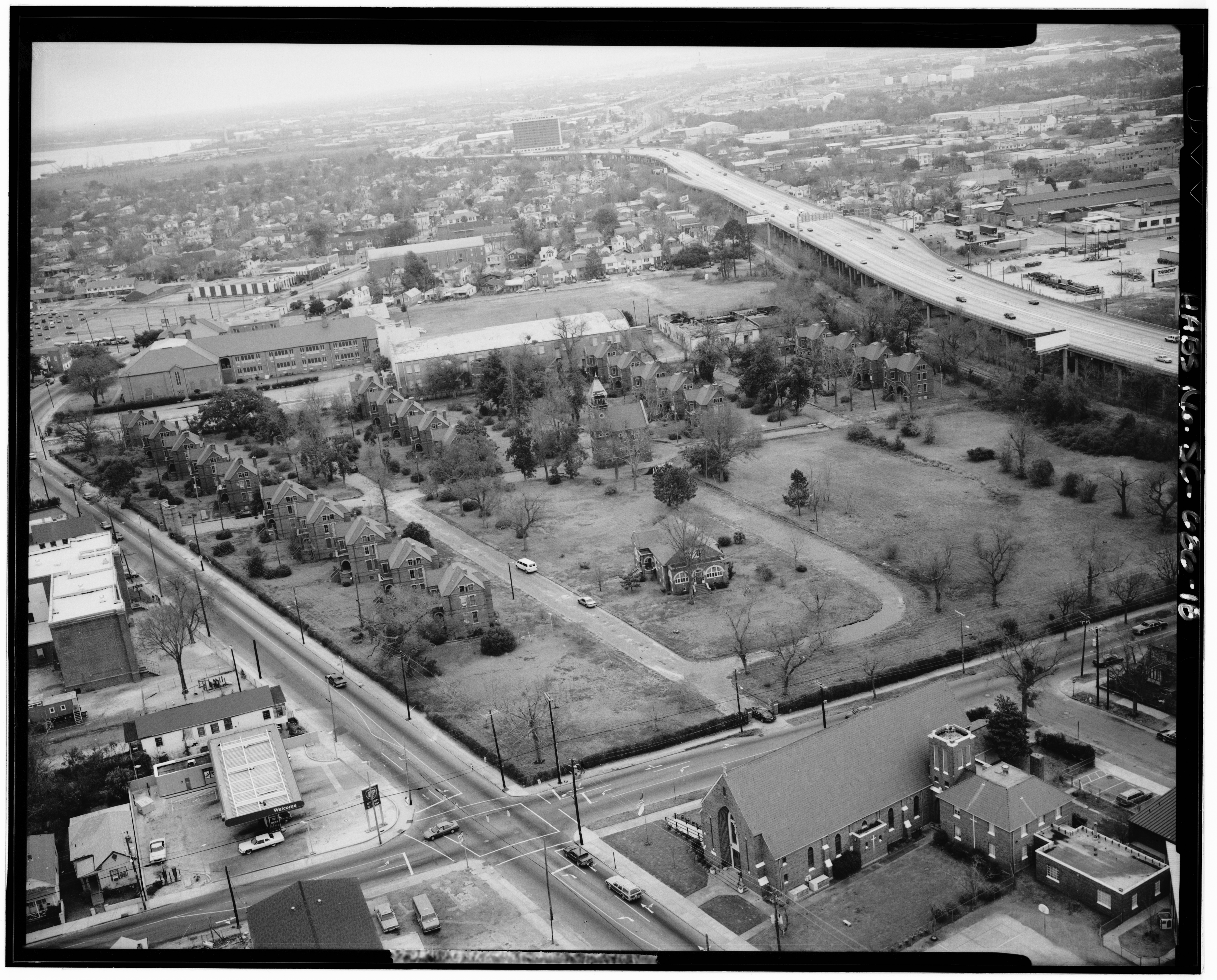

As Charleston settled on the peninsula in 1680, modern-day North Central lay beyond the town boundaries, encompassing the Grove, San Souci, and Rat Trap plantations.[1] Over time, the upper peninsula evolved into a vibrant neighborhood, home to a diverse population of working-class individuals, including both free and enslaved African Americans, as well as immigrants from Germany and Ireland.[2]
The nation’s first solely locomotive railroad had its tracks placed in the upper peninsula between 1821 and 1833.[1] This area’s development surged after its annexation by the city of Charleston in 1849.[2] Unlike downtown Charleston, which suffered significant destruction during the Civil War, the upper peninsula remained relatively untouched, making it a prime target for development.[3]


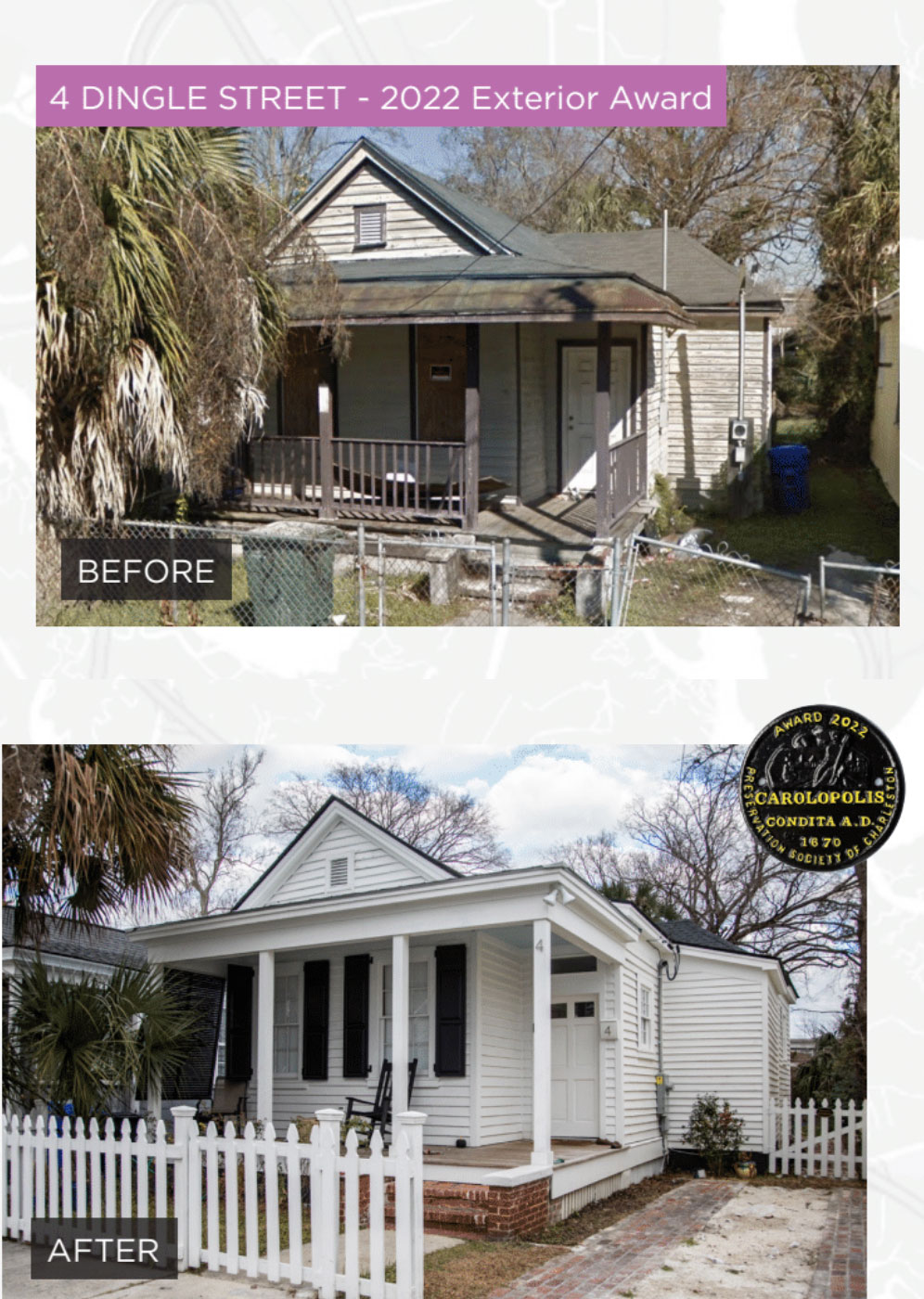
In the late 19th and early 20th centuries, North Central consisted of small farms and modest clusters of homes. The establishment of the Navy Yard and the South Carolina Interstate and West Indian Exposition nearby attracted many to the area, further boosted by the extension of trolley lines into the upper peninsula. The majority of North Central’s houses were built between 1920 and 1950, reflecting the vernacular architectural styles of the era.[4]
North Central has always fostered a strong sense of community. In 1936, an informal group of citizens began meeting to discuss neighborhood challenges. Local leader Vivian Moultrie Anderson, known for her advocacy for orphans and efforts toward integration, spearheaded this initiative. The North Central Neighborhood Council was officially recognized by the City of Charleston in 1978, following the adoption of a Citizen’s Participation Plan. Notably, North Central was the first neighborhood association to receive such recognition from the city.[1]
Today, the Preservation Society of Charleston and Historic Charleston Foundation are working on an Area Character Appraisal for the North Central Neighborhood. This document will help further the preservation of the neighborhood by defining the character, landmarks, and architectural forms that make it so special.
Keep scrolling to learn about how the PSC works for your neighborhood!
Events•Invitation to three membership meetings |
Updates•Our bi-annual signature magazine, Preservation Progress |
Shop Exclusives•10% discount in the PSC Shop |
[1] NCNA, “North Central Neighborhood Association Newsletter,” January 14, 2024.
[1] Audrey Marhoefer, Elizabeth Berry, Rachiel McDermott, Kayla B. Halberg, I-26 Corridor Historic Resources Survey, Historic Charleston Foundation. 3.
[2] Keven Eberle, Charleston Uptown Bicycle Tours, (Charleston, South Carolina: 2018), 8.
[3] Eberle, Charleston Uptown Bicycle Tours, 8.
[4] Historic Charleston Foundation & Preservation Society of Charleston, North Central Area Character Appraisal, 2024.
[1] Christina R. Butler, “The Development of North Central. Then and Now.,” Empire Properties, November 26, 2019.
[2] John Beaty and Ralph Bailey, A Historic Architectural Resources Survey of the Upper Peninsula Charleston, South Carolina Final Report, (Charleston, South Carolina: Brockington and Associates, Inc., 2004), 19.